Musée d'Orsay Tour Formats Compared
There are five ways to book this museum, and the price is the least interesting difference between them. Group size, guide time and how you get through the door matter more. This guide sets the formats against each other so you can pick one in a few minutes.
In this guide
- What separates one tour from another
- The guided group of twenty
- What semi-private means at six
- What a private guide buys
- What a plain ticket leaves you doing
- The two-museum combo
- Every format side by side
- How group size changes what you hear
- Does a higher price mean a better guide?
- What ratings and review counts tell you
- Which format suits which visitor
- Who should skip the guided tour
- Cancellation, changes and sold-out dates
- Common questions
What separates one Musée d'Orsay tour from another?
Every listing here gets you into the same building to see the same paintings. What changes is how many people stand between you and the guide, how long you are inside, and whether anyone is explaining what you are looking at.
Four things do the real work. Group size sets how much of the guide's attention you get. Duration sets how much of the collection you cover. Entry method decides whether you queue. And the guide's brief — highlights, masterpieces, or a route you choose together — decides what you actually see. Price follows those, rather than leading them.
The guided group of twenty
The standard format is a shared group of up to twenty, with headsets, running one hour forty-five minutes from $82 per person. Reserved entry is included, so you walk in through a dedicated door rather than the general queue.
Headsets matter more than the number. With them you hear the guide from the back of a crowded room, which is the difference between a tour and a scrum in front of Bal du moulin de la Galette. Twenty people move slowly through the upper level, so expect a curated selection rather than a full sweep. You get the Impressionist collection, the sculpture in the nave, and the works everyone came for.
What does semi-private mean when the cap is six?
Six guests, two to two and a half hours, from $73 per person. That is cheaper than the group of twenty and longer, which surprises people until they look at what it is not: there are fewer departures, and the times are fixed.
Six is the size at which a tour becomes a conversation. You can ask why Manet's Olympia caused what it caused, and get an answer rather than a nod. The guide can adjust the route to what the group responds to. It is the format most likely to end with you standing in front of something you had never heard of.
What does a private guide buy you?
Two products run private. One is the premium version of the six-guest tour at the same $73 per person, with the guide exclusively yours and a wheelchair-friendly route on request. The other is a private or small-group tour at $99 for ninety minutes, with a bilingual guide.
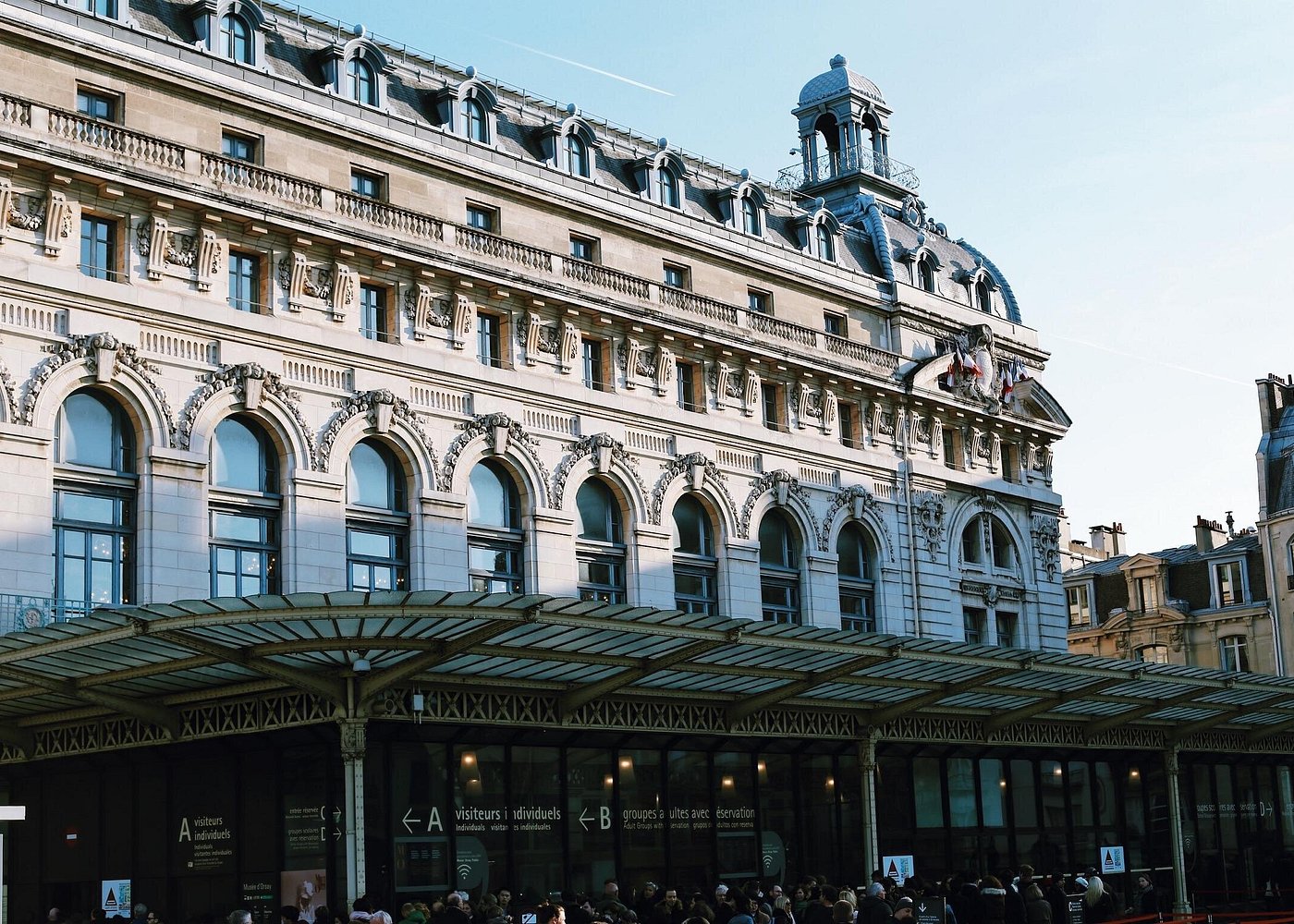
Private buys three things: the route, the pace and the questions. You can spend twenty minutes on Van Gogh and skip the Art Nouveau rooms entirely. With children, it means you can leave when they have had enough. With mobility needs, it means the lift route rather than the stairs, arranged in advance through Entrance C.
What a plain timed ticket leaves you doing
An entry ticket costs from $23 and admits you for a two- to four-hour visit through a dedicated entrance, with the permanent collection and temporary exhibitions included. Nobody explains anything. You choose your own route and set your own pace.
That suits more people than the tour industry likes to admit. If you have read about the collection, or you are returning, or you simply want to sit in front of one painting for half an hour, a ticket is the better purchase. The museum's own audio guide fills part of the gap for a few euros at the desk. What a ticket cannot do is tell you why a picture mattered enough to start a fight.
The two-museum combo
One listing pairs the museum with the Rodin Museum from $52, valid across a two- to six-hour window with a dedicated entrance at each. The two sit fifteen minutes apart on foot, and Rodin's garden is the outdoor half of a day that is otherwise entirely indoors.
It is a ticket, not a tour, so the caveats of the plain ticket apply. The saving against two separate admissions is real, and the sequencing is up to you — most people take Orsay first, while the upper level is quiet.
Every format side by side
| Format | Group | From | Length | Entry | What the guide does |
|---|---|---|---|---|---|
| Guided group | Max 20 | From $82 | 1 hr 45 min | Reserved, dedicated door | Headset commentary on the headline works |
| Semi-private | Max 6 | From $73 | 2–2.5 hrs | Reserved entry included | Conversation, route adjusted to the group |
| Premium private | Max 6 | From $73 | 2–2.5 hrs | Reserved entry included | The guide is exclusively yours |
| Private or small group | Max 6 | From $99 | 1 hr 30 min | Included | Bilingual, built round your questions |
| Masterpieces tour | Max 20 | From $69 | 2 hrs | Ticket and reservation included | An art historian on a fixed masterpiece route |
| Admission with audio | — | From $41 | 1–4 hrs | Emailed 24 hrs ahead | A one-hour digital audio guide, no live guide |
| Entry ticket | — | From $23 | 2–4 hrs | Dedicated entrance | Nothing — the route is yours |
| Orsay and Rodin combo | — | From $52 | 2–6 hrs | Dedicated entrance at both | Nothing — two museums, one purchase |
How much does group size change what you hear?
More than the price does. In a group of twenty, questions get asked at the end, if at all, and the guide has to pitch at the middle of the room. At six, the guide answers you by name and can follow a tangent without losing anyone.
The rooms themselves add to it. Level 5 is narrow and gets crowded from about eleven in the morning, and a large group has to hold a position and rotate people through. A group of six slots into the gap in front of a painting and stays there.
Does a higher price mean a better guide?
No, and the numbers here make that unusually clear. The most expensive listing at $99 is the shortest at ninety minutes, and the cheapest guided option at $69 comes with an art historian. Price tracks group size, duration and how much the operator pays for reserved entry slots.
Read the length and the cap first, then the price. A two-hour tour at $73 with six people is more guide time per person than a ninety-minute private at $99, unless having the guide exclusively to yourself is the point.
What the ratings and review counts tell you
Two numbers sit on each listing, and they answer different questions. The rating tells you how the tour performs; the review count tells you how confident you can be in that rating. A 4.97 across 1,041 bookings is a stronger signal than a 5.0 across nine.
Across the formats here, the small-group tours rate highest, the big guided group sits just behind, and the ticket-only products rate lowest — not because the tickets fail, but because a ticket is judged on whether the QR code scanned, and a tour is judged on whether the morning was good.
Which format suits which visitor
- First visit, limited time. The guided group. Reserved entry, the headline works, under two hours.
- You want to ask questions. Semi-private at six, or the premium version if you want no strangers at all.
- Travelling with children. Private, for the freedom to leave when attention runs out. The visit with children is easier when nobody else's schedule is involved.
- Returning visitor. A plain ticket. You know where you are going.
- Two museums in a day. The Rodin combo, with the garden as the afternoon.
- Mobility needs. Private, with the route agreed in advance.
Who should skip the guided tour entirely?
Anyone who has already read the collection, anyone who wants to draw or sit, and anyone whose day cannot survive a fixed start time. Tours begin when they begin, and a late arrival is a missed tour rather than a delayed one.
Art students and repeat visitors get more from a ticket and a plan. So does anyone visiting on the Thursday late night, when the building empties after seven and the reason to be there is the quiet rather than the commentary.
Cancellation, changes and sold-out dates
Every listing here refunds in full if you cancel at least 24 hours before the start time. One admission product also allows a reschedule at any point before departure, subject to availability, which is the most flexible arrangement in the set.
Small-group formats sell out first, typically a week or more ahead in spring and autumn. If the date you want shows nothing at six guests, the group of twenty almost always has space, and the plain ticket effectively always does. Book the format you want early rather than hoping it opens up.
Common questions
Is a guided tour of the Musée d'Orsay worth it?
What is the smallest group size available?
Do guided tours include the entry ticket?
Can I join a tour in a language other than English?
What happens if my tour is cancelled by the operator?
Ready to pick a format?
Every guided tour and ticket compared by group size, length and price.
Compare tours and ticketsTours that match this decision
One of each format, so you can see what the difference costs.