The Best Time to Visit the Musée d'Orsay
This is an indoor museum, so weather decides less here than at most Paris attractions. What changes through the year is how many people are standing in front of the paintings, and this guide takes the year in order.
In this guide
- When is the best time to visit?
- Month by month at a glance
- Spring, March to May
- Summer, June to August
- Autumn, September to November
- Winter, December to February
- Which day of the week is quietest?
- What the Monday closure does to Tuesday
- What time of day should you arrive?
- Is the Thursday late night quieter?
- When the free days are worth avoiding
- When the nave is worth photographing
- How far ahead to book, by season
- Common questions
When is the best time to visit the Musée d'Orsay?
A weekday morning between November and March, arriving at opening. That combination gives you the Impressionist collection before the rooms fill and a building running at a fraction of its summer load.
If your dates are fixed, the same logic scales down to a single day: the first hour after 9:30 a.m. is quieter than the middle of any day in any month, and a Thursday evening is the best alternative when mornings are impossible.
Nothing about the collection changes with the season. The permanent rooms hang the same works in January as in August, so the whole question is about company: how many people are between you and the painting, and how long you wait to get in the door.
Month by month at a glance
| Month | Crowds | What is on | Light and weather | What to watch for |
|---|---|---|---|---|
| January–February | Lightest | Winter exhibitions, quiet rooms | Short days, grey light in the nave | Closed 1 January and every Monday |
| March–April | Building | Spring exhibition openings | Longer afternoons, clear clock views | Easter school holidays fill the upper level |
| May–June | Busy | Full programme | The best daylight of the year | Closed 1 May; long weekends are heavy |
| July–August | Heaviest | Summer exhibitions | Hot outside, cool inside | Midday queues on the Esplanade; book ahead |
| September–October | Busy, then easing | The strongest exhibition season | Warm light, comfortable walking | Late October holidays bring families back |
| November–December | Light, apart from holidays | Winter programme | Dark by five, the nave lit from within | Closed 25 December; late December is busy |
Spring, March to May
Spring is when the building starts to feel busy again and the light through the west clock face improves week by week. Exhibition programmes open in this window, so it is a good season for anyone who wants more than the permanent collection.
Two things to plan around. Easter holidays fill the upper level from late morning with family groups, and the museum closes on 1 May, which lands in the middle of a long weekend when a lot of visitors have the day free.
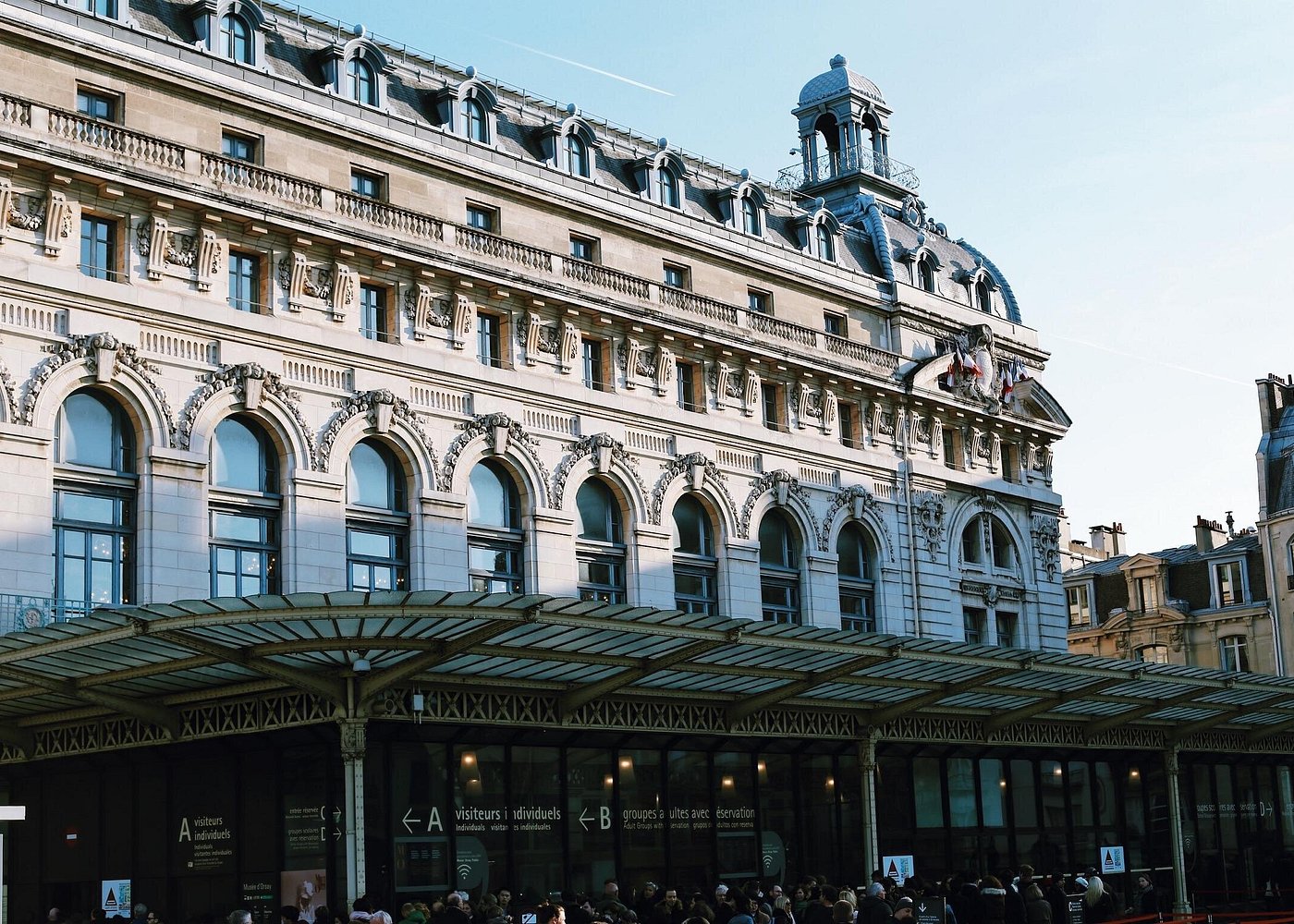
Spring is also when reserved entry starts to pay for itself. From about April the general queue on the Esplanade becomes a real wait at midday, while a booked slot with a dedicated door still walks in.
Summer, June to August
July and August are the heaviest months, and the queue on the Esplanade is at its longest between eleven and three. Inside, the temperature is a relief; outside, the wait is not.
This is the season where reserved entry earns its price. A guided tour or a timed ticket with a dedicated door turns a thirty-minute wait into a walk-in, and small-group tours should be booked a couple of weeks ahead. If you are visiting in summer without a plan, aim for the 9:30 opening or after four in the afternoon.
Summer has one genuine advantage: the building is cool. On a thirty-degree afternoon in Paris, three hours in a stone-and-glass hall beats anything outdoors, and the Thursday evening opening turns into the most comfortable slot of the week.
Autumn, September to November
The best season here, on balance. September still carries summer visitors but the crowds thin through October, the exhibition programme is at its strongest, and the walking weather either side of the visit is comfortable.
The exception is the late-October school break, when family visits return for a fortnight. November is the quiet reward: short days, a warm building, and the upper level roomy enough to stand back from a painting.
Autumn is also when the exhibition calendar does its heaviest lifting. If a temporary show is the reason for your trip rather than a bonus, this is the season most likely to have one running, and the one where booking a fortnight ahead is worth the effort.
Winter, December to February
January and February are the quietest months of the year, and the museum is at its easiest to visit. Rooms that hold shoulder-to-shoulder crowds in July have space in front of every frame.
Two closures to note: 25 December and 1 January, alongside every Monday. Late December between the holidays is busier than the rest of winter, since Paris fills for the season and an indoor museum is where wet afternoons go.
Winter light suits the building better than people expect. The nave is lit from within rather than through the roof, which flattens the glare and makes the sculpture read more clearly, and the clock face glows against a dark sky by mid-afternoon.
Which day of the week is quietest?
Wednesday and Friday, as a rule. Tuesday absorbs the visitors displaced by the Louvre's own closing day, weekends are the busiest, and Thursday splits into a normal day and a quiet evening.
If your trip includes a weekend, take the Sunday morning over the Saturday afternoon — unless it is the first Sunday of the month, which is free for everyone and busy from opening.
Guided departures follow the same pattern. Midweek mornings carry the most choice of formats and times, while weekend slots on the six-guest tours are the first to disappear in any month.
What the Monday closure does to Tuesday
The museum closes every Monday, so Tuesday carries two days of demand. The Louvre closing on Tuesday sends its visitors across the river on the same morning, which makes Tuesday the busiest weekday here.
It is easy to plan around once you know it. Put this museum on a Wednesday or a Friday, give the Louvre its own day, and the whole week gets easier.
What time of day should you arrive?
At 9:30 when the doors open, or after 4 p.m. if you only want a short visit. The upper level fills from about eleven and stays full until mid-afternoon.
Last admission is 5 p.m., exhibitions stop admitting at 5:15, and the rooms begin closing at 5:30, so a late-afternoon arrival is a focused hour rather than a full visit. On Thursdays the whole schedule shifts three and a half hours later.
The middle of the day is the one window worth avoiding outright. Between eleven and three the arrival flow, the school groups and the tour departures all overlap, and the same rooms that felt spacious at opening take twice as long to walk.
Is the Thursday late night genuinely quieter?
Yes, after about seven. The museum runs to 9:45 p.m. with last admission at 9 p.m., and the €12 evening ticket applies from 6 p.m. at the museum's own ticketing.
The first hour of the late opening carries the tail of the day's crowd. Arrive at seven rather than six and you get the emptiest building of the week, with the trade that the clock face is dark and daylight through the roof is gone.
When the free days are worth avoiding
Admission is free for everyone on the first Sunday of each month, with a time slot booked online in advance. It is a genuine saving, and it is also the busiest day in the month upstairs.
If the collection is the point of the trip, pay on a Wednesday instead. If the budget is the point, book the slot the moment it opens and be at the door at 9:30 rather than arriving at noon.
When is the nave worth photographing?
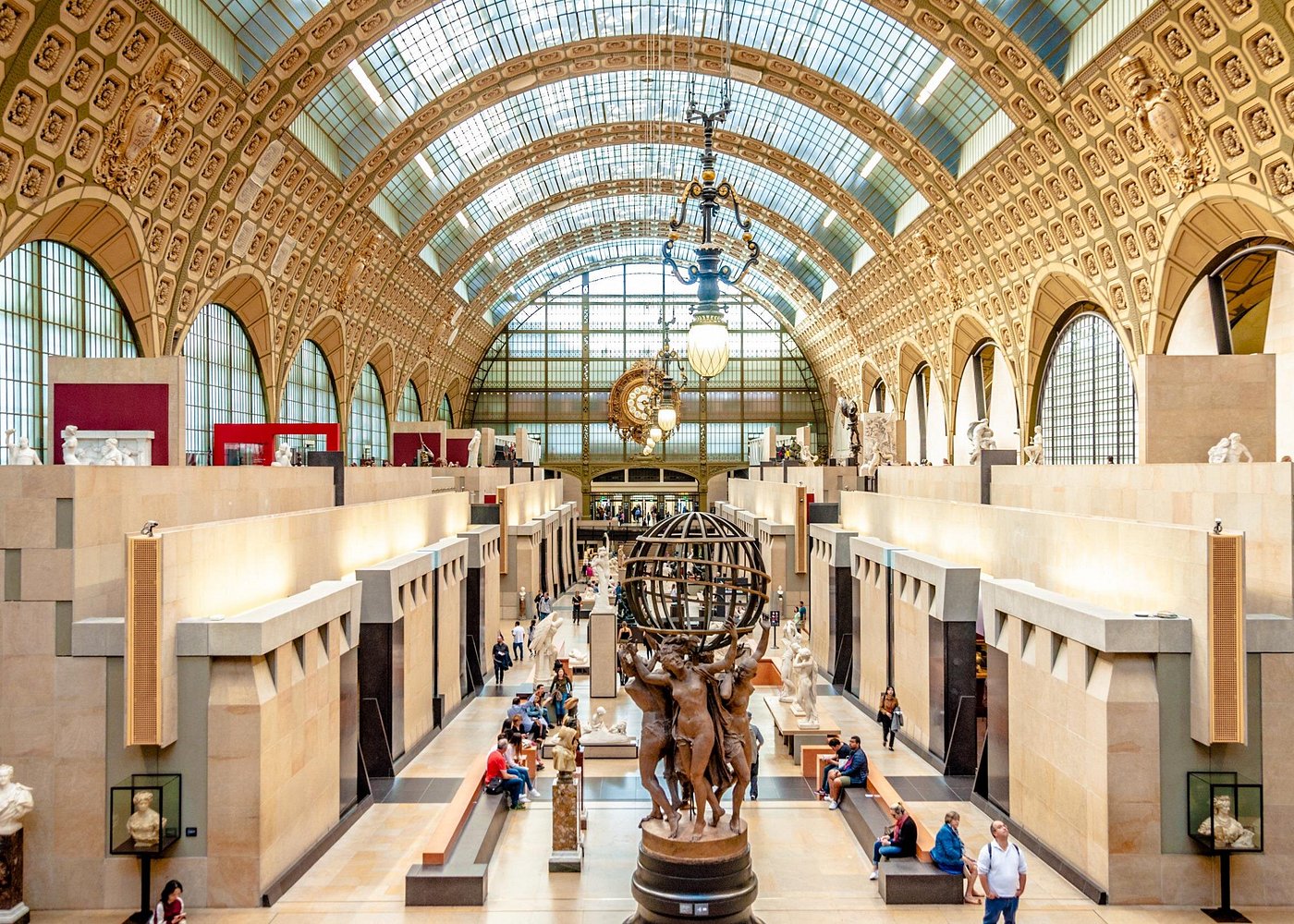
Late morning on a bright day, when light comes through the glazed roof and down the length of the old station floor. The gilded clock at the end of the nave holds its detail best in that hour.
The upper clock face is the other shot, and it works in the opposite conditions: late afternoon, with the Right Bank behind the glass. Photography without flash is permitted in the permanent collection, and the photographs here show what the building looks like in both.
How far ahead to book, by season
- July and August. Two weeks for small-group tours, several days for timed admission.
- Spring and autumn. A week for six-guest formats, two or three days for a ticket.
- Winter. A few days is usually enough, and walk-up works midweek.
- Free first Sundays. The moment the slots are released, in any season.
Cancellation is free up to 24 hours ahead on every listing here, so booking early costs nothing and holds the format you want. For what is running while you are in Paris, the Musée d'Orsay exhibitions page tracks the dated programme.
One rule covers every season: book the thing that is scarce, and leave the thing that is plentiful until later. Six-guest departures and free Sunday slots are scarce in every month of the year. Plain timed admission almost never is, which means the ticket can wait until the rest of the trip is settled.
Common questions
What is the quietest time to visit the Musée d'Orsay?
What is the busiest time at the Musée d'Orsay?
Is the Musée d'Orsay open on Mondays?
Does the museum get busier when it rains?
When should you book a Musée d'Orsay tour?
Picked your month?
Reserve the format you want before the calendar fills — free cancellation 24 hours ahead.
Compare tours and ticketsTours worth booking ahead in peak months
Reserved entry matters most when the Esplanade queue is at its longest.