The Musée d'Orsay Itinerary
The museum will take as much of your day as you give it, and a plan decides whether that feels generous or rushed. This guide sets out three visit shapes hour by hour, then what to put either side of them.
In this guide
- How long the museum needs
- The two-hour visit
- The half-day visit
- What a full day adds
- Which shape suits you
- What pairs well in the same day
- Morning or afternoon?
- Where the Thursday late night fits
- Around a train or a first day
- Eating without losing the visit
- What a first visit should not attempt
- If you only have an hour
- Common questions
How long does the Musée d'Orsay need?
Two hours is the working minimum for a first visit, and about four is the point where most people are finished. The building holds around three thousand works on show across three levels, and nobody sees them all in a day.
The constraint is not the size but the concentration. The Impressionist collection sits in one dense band under the roof, and an hour there uses more attention than two hours anywhere else in the building. Plan the rest of the day around that.
The guided listings agree with that arithmetic. They run from ninety minutes to two and a half hours, and none of them attempts the whole collection. A guide's job here is to choose thirty works and leave the other few thousand alone, which is a useful model even if you are walking the building on your own.
The two-hour visit, hour by hour
This is the shape most guided tours take, and it works because it goes up first.
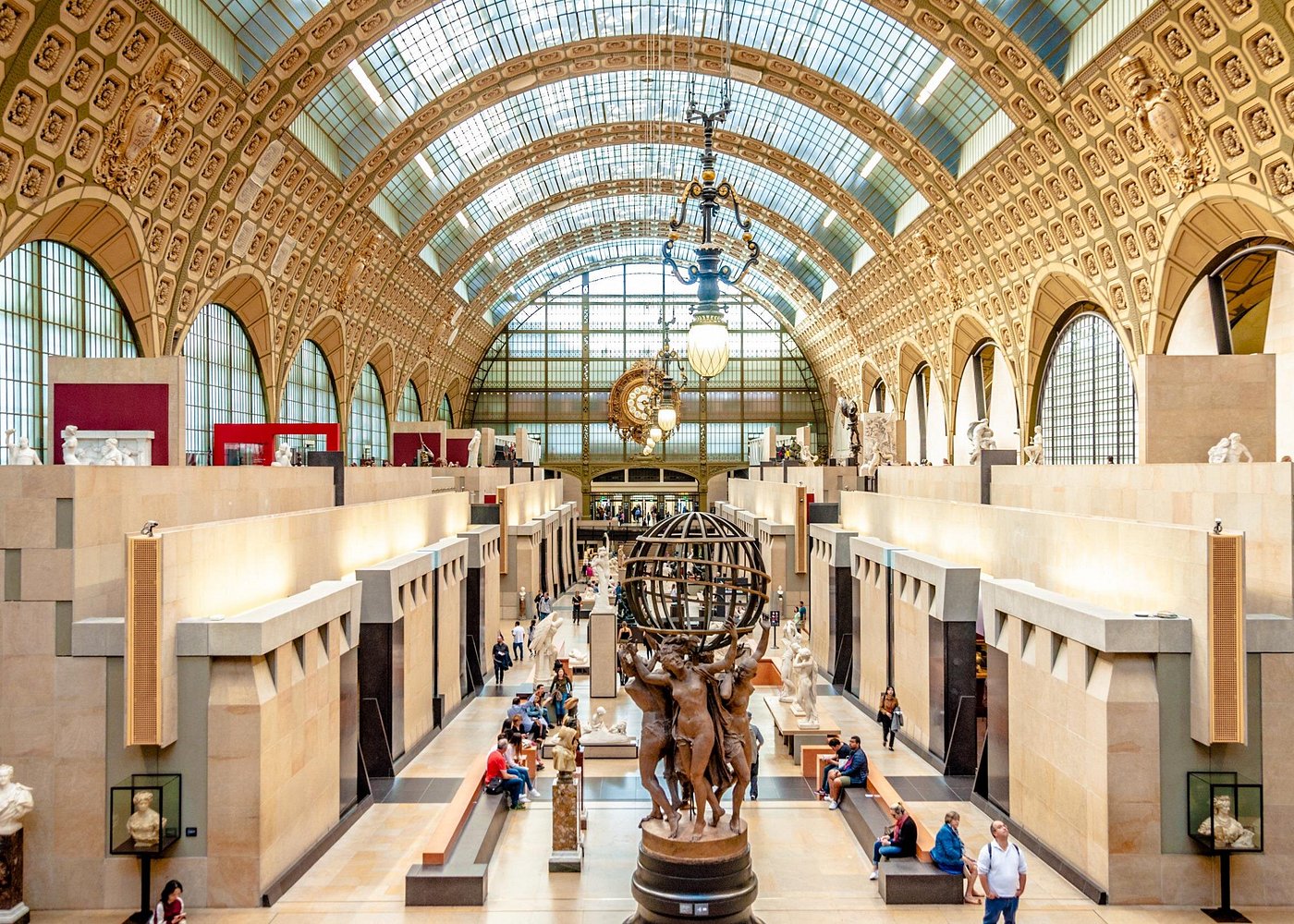
- First 10 minutes. Security screening and the ticket check, then the nave — the length of the old station in one look.
- 0:10 to 1:00. Straight to Level 5 by lift or escalator. Monet, Renoir, Degas, Van Gogh, and the clock face with Paris behind it.
- 1:00 to 1:30. Down to Level 2 for the late century and the ballroom.
- 1:30 to 2:00. The nave sculpture on the way out, including the Little Dancer and Courbet at ground level.
Reserve fifteen minutes at the end rather than the start. The nave is the one part of the building that reads well when you are tired.
What gets cut in two hours is everything decorative. The Art Nouveau rooms, the model of the Paris opera quarter under glass, and any temporary exhibition all need time this shape does not have. Accept that at the start and the two hours feel generous rather than clipped.
The half-day visit, hour by hour
Four hours turns a march into a visit. The order stays the same; what changes is that you stop.
- 9:30. Doors open. Go up immediately — the upper level is at its quietest in the first hour.
- 10:30. Coffee behind the clock face, then the rest of Level 5.
- 11:30. Level 2, the Art Nouveau rooms and the ballroom.
- 12:30. The nave, then whatever temporary exhibitions are running.
- 13:30. Out, with the afternoon still ahead of you.
The break in the middle is the part people cut, and it is the part that makes the difference. Forty minutes sitting down at the halfway mark buys back an hour of useful attention afterwards, which is why the half day covers more than twice what the two-hour version does.
What a full day adds
A full day is not more museum; it is the museum plus its neighbourhood. Six hours inside is too much for almost anyone, so the second half of the day belongs outside.
The usual shape is the collection until early afternoon, lunch on the Left Bank, then the Rodin Museum and its garden. That pairing is sold as a single combo ticket from $52, which covers both entrances and lets you set your own timings between them.
Watch the validity window rather than the clock. The combo runs across a two- to six-hour span, so a slow lunch between the two museums is fine, but a morning here and a return to Rodin the following day is not what the ticket covers. If the second museum matters as much as the first, do them in one continuous stretch.
Which trip shape suits you
| Shape | Hours inside | What you see | What you give up | From |
|---|---|---|---|---|
| Highlights dash | 1–1.5 hrs | Level 5 and the nave | Level 2, exhibitions, any sitting down | From $23 |
| Guided two hours | 1 hr 45 min | The headline works, explained | Choosing your own route | From $82 |
| Half day | 3–4 hrs | All three levels, a break, one exhibition | The rest of your morning | From $23 |
| Two museums | 2–6 hrs | This collection plus Rodin and the garden | Depth in either one | From $52 |
| Thursday evening | 2–3 hrs | The collection with the crowds gone | Daylight through the clock | From $23 |
What pairs well with the museum in the same day?
Three things, in rough order of how well they work.
- The Rodin Museum, fifteen minutes on foot, mostly garden. It is the outdoor release valve a day in an indoor museum needs, and the combo ticket makes it cheaper than buying both.
- The Orangerie, across the river in the Tuileries. Small, quick, and the Monet water lilies finish the thought the upper level starts.
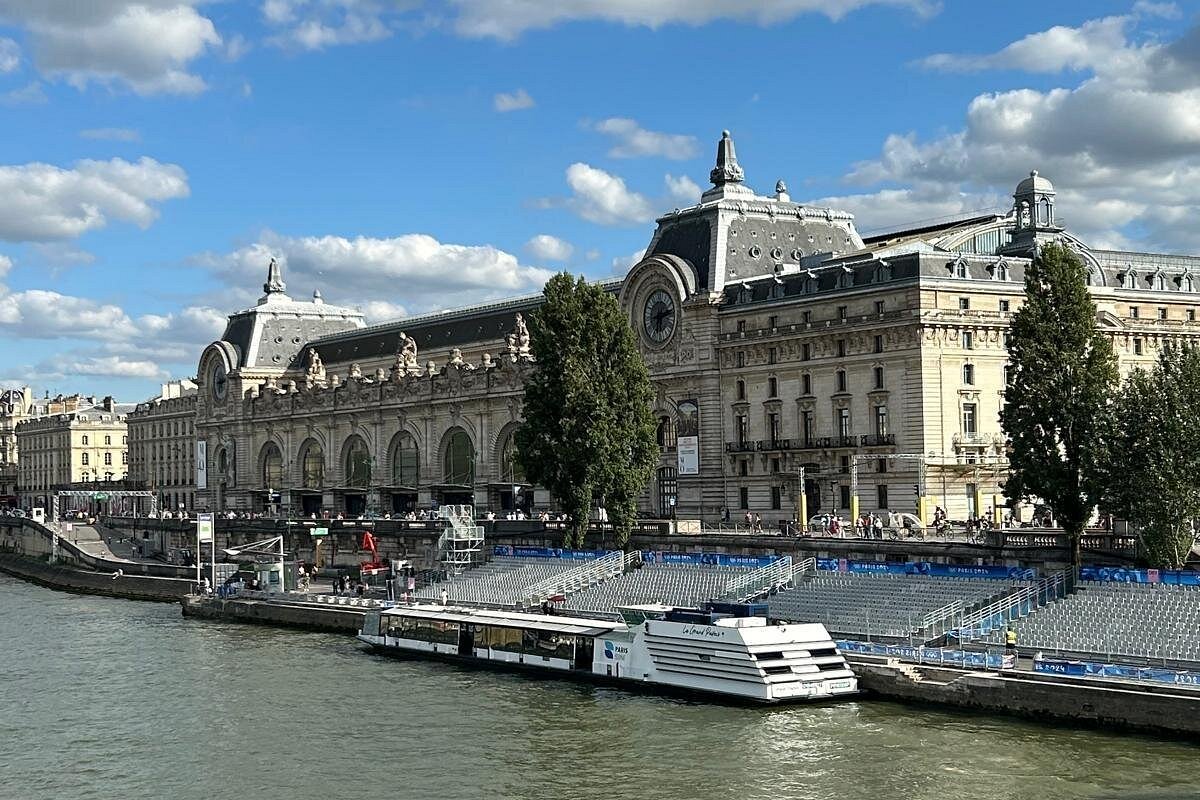
- The Left Bank quays, immediately outside. Free, and the best view of the building is from the far side of the Seine.
What does not pair well is the Louvre. Both are three-hour museums, and doing them back to back means neither gets your attention. Put a day between them if you can — and remember the Louvre closes on Tuesdays while this museum closes on Mondays.
Morning or afternoon: which is better?
Morning, if you care about the Impressionist rooms. The upper level fills from about eleven, and the first hour after opening is the only time it feels roomy.
Afternoons have their own case. From about four the building thins out, the light through the west clock face is at its best, and if you only want the nave and one level you will have a calmer visit. Last admission is 5 p.m., so an afternoon arrival is a ninety-minute visit rather than a leisurely one.
Where the Thursday late night fits
On Thursdays the museum stays open until 9:45 p.m., with last admission at 9 p.m. and the rooms closing at 9:15. From 6 p.m. an evening ticket costs €12 at the museum's own ticketing.
It is the single best scheduling trick here. You get a full day elsewhere in Paris, then three hours in a museum that has emptied out. Guided tours run mostly in daylight hours, so a Thursday evening is usually a self-guided visit.
Fitting the museum around a train or a first day
The building sits on the Seine in the 7th arrondissement, at Esplanade Valéry Giscard d'Estaing, which puts it inside the walkable centre. It works well on an arrival day because it asks nothing of you but standing: no timed walking tour, no boat, no long transfer.
Bags are the constraint. The cloakroom takes coats and small bags, and large luggage is not admitted, so a suitcase means a locker at your station or hotel first. Give yourself an extra half hour for that on an arrival day.
The cloakroom itself has a rhythm worth knowing. It is busiest in the first hour, when everyone arrives together, and again at closing. Drop your coat mid-morning or carry it up and hand it in on the way down, and you skip both queues.
Where to eat without losing the visit
There is a restaurant on the middle level in the old station dining room, a café by the clock on Level 5, and a self-service option. All three are accessible without leaving the building, which matters because re-entry is not permitted on a single-entry ticket.
If you would rather eat outside, do it at the end. Leaving in the middle of a visit costs you your place in the flow, and the Left Bank has more choice than any museum café five minutes' walk away.
One practical detail decides this for most people: admission is valid for a single entry. Step outside for a sandwich and the ticket is spent, whatever time is left on the clock. If the plan runs past midday, eat inside or eat afterwards.
What a first visit should not attempt
Do not try to see everything on the ground floor before going up. It is the most common sequencing mistake here: the nave is the first thing you see, it is full of sculpture, and an hour disappears before you reach the paintings you came for.
Do not book a tour that starts within an hour of a train arrival, and do not plan a second major museum for the same afternoon. One is a scheduling risk; the other is a guarantee of diminishing returns.
And do not treat the temporary exhibitions as a bonus you can absorb on the way past. They are separate rooms with their own queue at the door and their own last admission at 5:15 p.m. Either build one into the plan properly or leave it for another trip.
If you only have one hour
Go straight up. Level 5, the Impressionist rooms, the clock, then down the escalator to the nave and out. That is roughly forty minutes of looking and twenty of moving, and it covers most of what people come here to see.
Skip the temporary exhibitions in that hour — they need their own visit and are the first thing to cut. For a fuller walking order, the level-by-level walkthrough sets out what sits where. To compare the tours that fit an hour and a half, start at Musée d'Orsay Tours.
Common questions
How many hours do you need at the Musée d'Orsay?
Can you do the Louvre and the Musée d'Orsay in one day?
Is the Musée d'Orsay better in the morning or the afternoon?
What is within walking distance of the Musée d'Orsay?
Do you need to book a time slot in advance?
Have your shape? Pick the ticket that fits it.
Timed tickets, two-hour tours and the two-museum combo, side by side.
Compare tours and ticketsTours that fit these plans
A two-museum ticket, a two-hour tour and a shorter one, to match the shape you pick.