Inside the Musée d'Orsay, Level by Level
The short answer
Take the lift to the upper level first, where the Impressionists are, then work down through the middle level's Art Nouveau rooms and finish along the ground floor nave. Doing it in that order rather than the reverse is the difference between seeing the famous paintings calmly and seeing them in a crowd.
The Musée d'Orsay is not a difficult building to navigate, but it is an easy one to walk in the wrong order. Almost everyone enters at ground level, starts where they are standing, and arrives at the Impressionist rooms ninety minutes later along with everybody else who did the same. This guide walks the museum the other way round.
For the individual works worth stopping at, see our Musée d'Orsay highlights; for hours and entry, our visiting guide.
The shape of the building
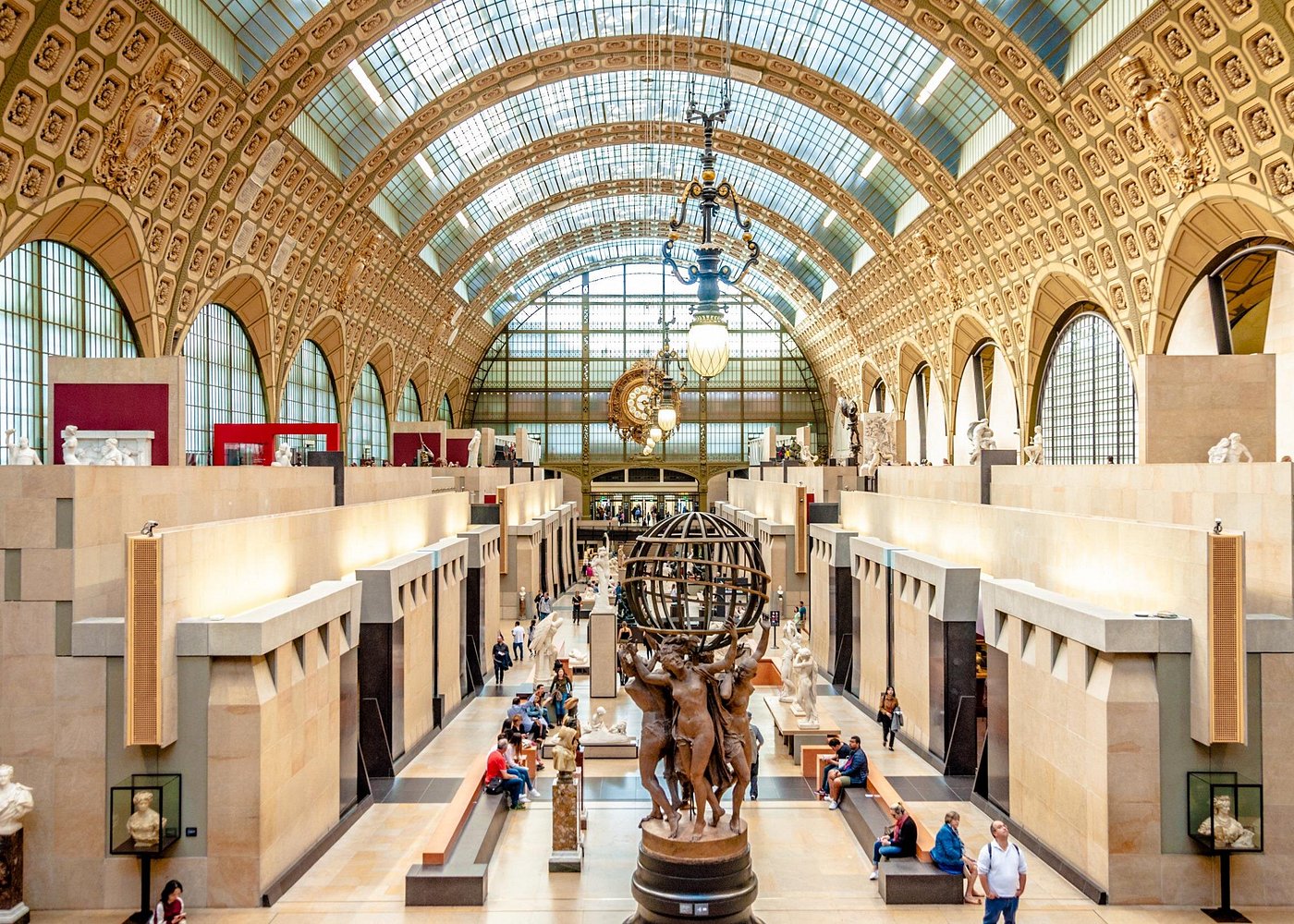
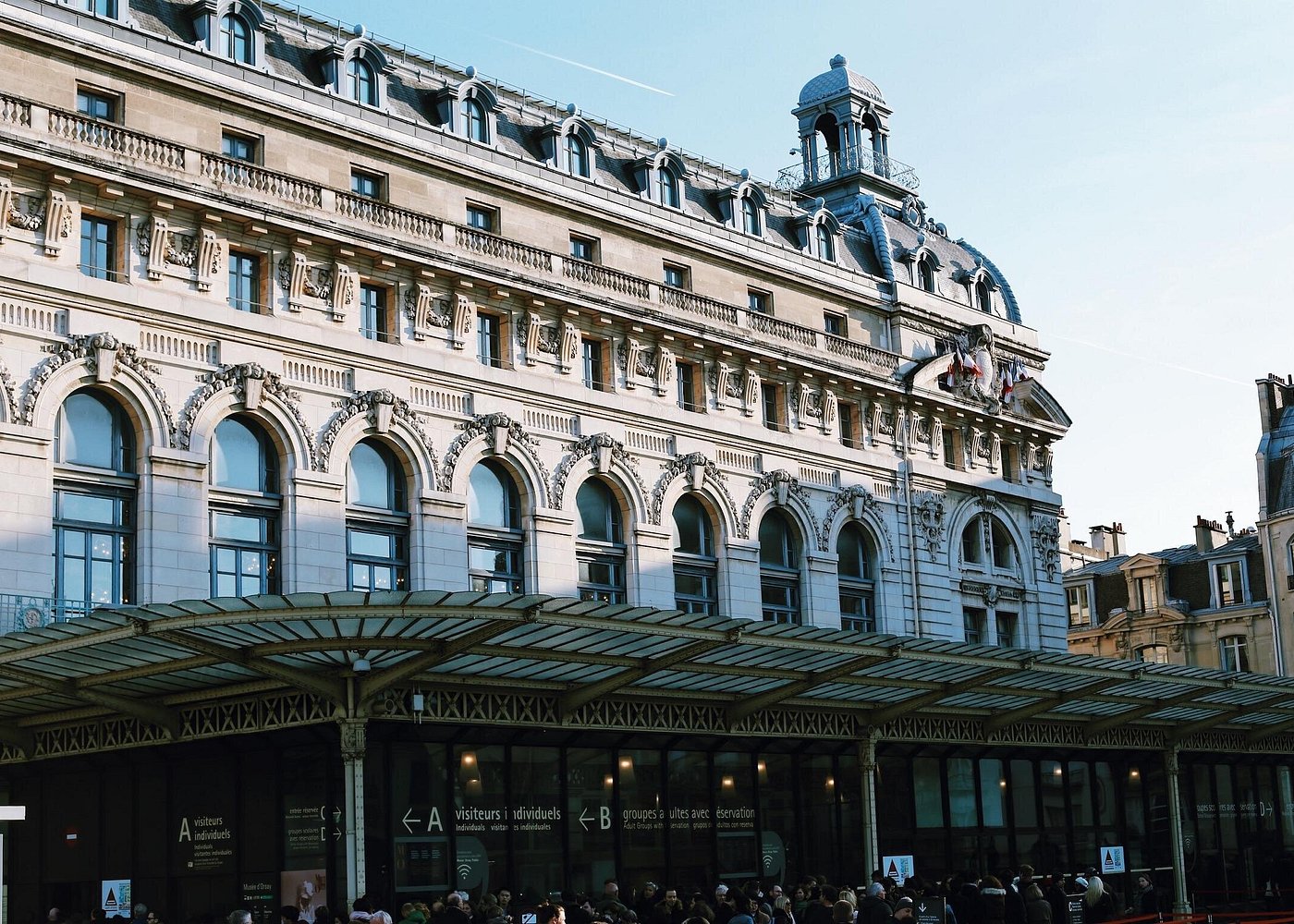
Everything about the layout follows from what the building used to be. It opened in 1900 as the Gare d'Orsay, and the great vaulted hall down the middle was the platform hall. The glazed roof that now lights the sculpture was there to light the trains. Once you see that, the plan stops feeling arbitrary. The full story is on our history of the Musée d'Orsay page.
| Level | What is there | Time to allow | Crowding |
|---|---|---|---|
| Upper | Impressionist and Post-Impressionist painting | 45–70 min | Heaviest — go first |
| Middle | Later 19th century, Art Nouveau, terraces over the nave | 30–45 min | Moderate |
| Ground | The nave: sculpture, and the earlier 19th century | 30–40 min | Lightest |
Start at the top: the Impressionist level
This is the floor the museum is famous for, and it holds the largest collection of Impressionist and Post-Impressionist painting anywhere. Monet, Manet, Renoir, Degas, Cézanne, Berthe Morisot, Sisley, Seurat, Gauguin and Van Gogh are all here in depth rather than by a single canvas each.
Regular visitors talk about this floor by number, and it is worth knowing that shorthand before you arrive: ask staff about the fifth floor and everyone will know what you mean.
What to slow down for:
- Manet's Olympia, 1863 — the painting that scandalised the 1865 Salon, and still the most confrontational thing in the building.
- Renoir's Bal du moulin de la Galette, 1876 — a Montmartre afternoon under dappled light, and one of the largest canvases here. Stand further back than feels natural.
- Van Gogh — the 1889 self-portrait, and Starry Night Over the Rhône, painted at Arles in 1888.
- Degas — the ballet paintings, and the sculpture of the Little Dancer Aged Fourteen, dressed in real fabric.
Down to the middle level
The middle level carries the later nineteenth century and the museum's Art Nouveau holdings, and it is markedly quieter than the floor above. This is where furniture stops being furniture and starts being sculpture, and where an hour goes very quickly if the period interests you at all.
It also has the terraces that look down the length of the nave, which is the best vantage point in the building for understanding what you are standing inside. Our collections guide covers what the museum holds beyond the paintings.
The clock
The great glass clock faces are part of the original station, and from behind one of them you look out across the Seine with the hands in silhouette. It is the most photographed spot in the museum and there is usually a short, good-natured wait for the view. It is worth it.
Finish in the nave
The ground-floor nave is the vaulted hall the trains once used, and it now holds nineteenth-century sculpture lit from the glazed roof above. For years that sculpture sat in storerooms for lack of anywhere to put it; the old station is what rescued it.
Walking the nave end to end takes about ten minutes and does more to orient you in the building than any floor plan. Leaving it until last also means you finish somewhere calm, which is a better end to a visit than the reverse.
Where the temporary exhibitions sit
Temporary exhibitions run alongside the permanent collection and are covered by the same ticket, subject to availability. That last phrase does real work: a heavily booked exhibition can be full on a day when the museum itself is not.
They also close earlier than you would expect. Last admission to the exhibitions is 5:15 p.m. against 5 p.m. for the museum, and the galleries start emptying from 5:30 p.m. If a temporary show is your main reason for coming, treat it as the fixed point of the day and build the rest of the visit around it. Our exhibitions and events guide explains how the programme works without listing dates that would go stale.
The practical middle of a visit
Two things are worth knowing before you are tired and looking for them. The cloakroom is where large bags go, and it is also where the free loan wheelchairs, folding seats and walking sticks are issued against an identity document. The café and restaurant are both inside and both reachable step-free, which makes them a genuine option rather than a last resort.
Breaking a long visit in half at the café works particularly well on a Thursday evening, when you have until 9:45 p.m. and no reason to rush the second half.
If you only have an hour
It happens more often than anyone plans for. In that case do not attempt the building — attempt one floor. Go straight up, spend fifty minutes on the Impressionist level, stop at the clock on the way out, and skip the rest without guilt. An hour spent well on one floor beats an hour spread thin across three, and the nave is visible from the entrance anyway.
What you will not see
Around three thousand works are on display at any one time, out of a much larger holding, and rotation is normal. Works on paper and photography in particular cannot be lit continuously without damage, so they come and go. Loans to other museums are common, and the paintings that travel tend to be the famous ones.
If you are making the trip for one specific picture, check it is on the wall before you book. A guide will usually know what has moved this month, which is one of the quieter arguments for booking one. Our FAQs answer the practical questions, and what travellers say gives a sense of how the guided visits actually run.
Want someone to walk it with you?
Small-group guided tours pick the twenty works that matter and connect them.
Musée d'Orsay toursTours that walk this route
Both take the levels in the order above, with someone explaining what is on them.