15 Musée d'Orsay Facts That Surprise
The short answer
The Musée d'Orsay was a working railway station, the first electrified urban terminal in the world, and it came close to being demolished in the 1970s. Its collection stops dead at 1914, it holds an American icon the French state bought in 1891, and the Van Gogh most visitors come looking for is in New York.
The Musée d'Orsay is unusual among great museums in that the building has a better story than most of its neighbours' collections. Here are twelve things about it that surprise people, all of them checkable. For the works themselves, see our Musée d'Orsay highlights.
1. It was a working railway station
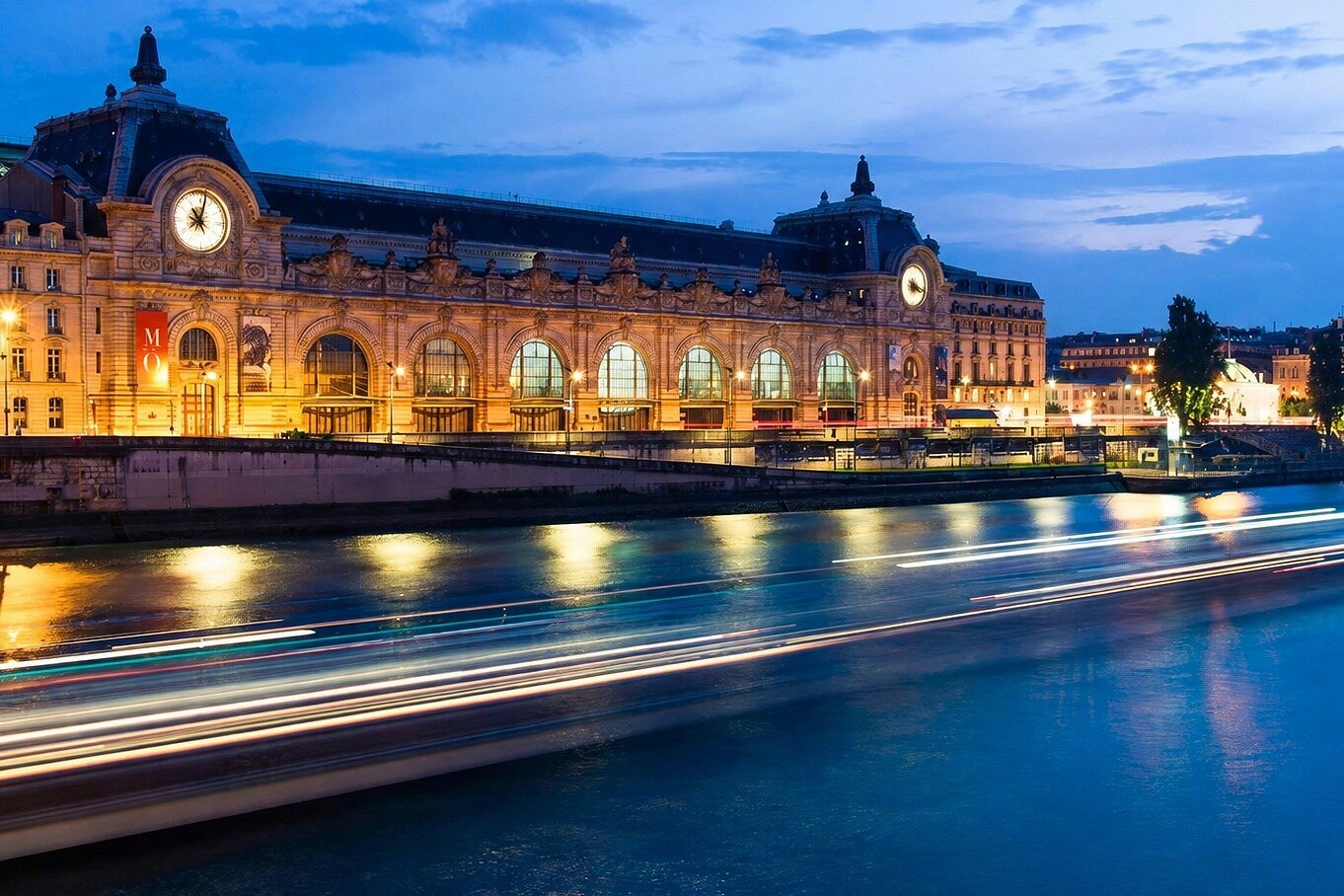
The Gare d'Orsay opened on 28 May 1900 as the Paris terminus of the Chemin de Fer de Paris à Orléans. The vaulted hall that now holds the sculpture collection was the platform hall.
2. It was the first electrified urban terminal in the world
That is not a decorative detail; it is the reason the building exists where it does. Steam locomotives filled a trainshed with smoke, which is why the great termini sit at the edges of cities. Electric traction did not, so the line could put its terminus on the Seine in the middle of Paris, directly opposite the Tuileries.
3. It was built for a World's Fair
The opening was timed for the Exposition Universelle of 1900, the fair that brought the world to Paris that summer. The deadline explains the pace of construction and a good deal of the ambition.
4. It was designed to not look like a station
Putting an industrial building on that site came with a condition: it could not look industrial. Victor Laloux, working with Lucien Magne and Émile Bénard, faced it in large stone blocks in the Beaux-Arts manner and hid the ironwork behind ornate façades.
5. The statues on the outside are cities
The stone figures on the exterior personify the destinations the railway served — Bordeaux, Toulon and Nantes. The building advertises its own timetable.
6. Its platforms were obsolete within forty years
They had been laid out for the shorter trains of 1900 and could not take the longer mainline stock that followed, and the layout left little room to adapt. In 1939 the station closed to mainline traffic, having been a terminus for less than four decades.
7. It nearly came down
By the late 1960s the building was widely seen as an obstruction, and a redevelopment scheme would have replaced it with a hotel. The mood of the period was not kind to nineteenth-century architecture — the iron market pavilions of Les Halles were demolished in the same era. Their loss is part of what changed the argument. The full sequence is on our history of the Musée d'Orsay page.
8. A president pushed for the museum
In 1973, at the urging of Georges Pompidou, the Direction des Musées de France began considering the disused station as the site of a museum gathering every art form from 1848 to 1914 under one roof, and relieving the overcrowded Louvre and Jeu de Paume.
9. The collection stops dead at 1914
The remit runs 1848 to 1914 and nothing either side. That is why you will not find the Renaissance here — it stays at the Louvre — and why Cubism and everything after belongs to the Centre Pompidou. Three museums, one continuous story, split by date. Our collections guide explains how that plays out room by room.
10. An Italian architect built the galleries
The interior was given to Gae Aulenti, who had to make galleries inside a vast top-lit hall built for trains without either filling it in or ignoring it. The museum opened in December 1986, and the station's bones are still the most memorable thing about the interior.
11. One of America's most famous paintings is here
James McNeill Whistler's Arrangement in Grey and Black No. 1 — universally known as Whistler's Mother — hangs in Paris because the French state bought it in 1891. It is one of the most famous works by an American artist held outside the United States.
12. The Van Gogh most people come for is not here
Visitors arrive looking for The Starry Night and it is in New York, at the Museum of Modern Art. What Orsay holds is Starry Night Over the Rhône, painted at Arles in 1888: the same subject, a quieter picture, and one that rewards standing in front of far more than its famous cousin.
13. One painting here started a riot of criticism
Manet's Olympia, painted in 1863, was shown at the Paris Salon in 1865 and caused a scandal. Critics called it profane and unacceptable. Manet had taken a pose the Salon had accepted for centuries and made the woman contemporary, specific and entirely unbothered by being looked at. The offence was never really the nudity.
14. The collection arrived fully formed
Most museums grow. This one was assembled by transfer: when it opened in 1986 the holdings moved in from the Louvre, the Galerie nationale du Jeu de Paume and elsewhere. Much of the Impressionist collection came straight from the Jeu de Paume, which had been showing it for decades in a building far too small for the crowds. That is why Orsay's Impressionist rooms were the strongest anywhere from the day it opened.
15. You are seeing a fraction of it
Around three thousand works are on display at any one time, out of a much larger holding. Rotation is constant, particularly for works on paper and photography, which cannot be lit continuously without damage. If you are travelling for one specific picture, check it is actually on the wall before you book.
The building's timeline at a glance
| Year | What happened |
|---|---|
| 1898–1900 | Built to designs by Victor Laloux for the Paris–Orléans railway |
| 28 May 1900 | Opens as the Gare d'Orsay, timed for the Exposition Universelle |
| 1939 | Closes to mainline traffic — the platforms are too short |
| 1960s–70s | Slated for redevelopment; a hotel scheme would have replaced it |
| 1973 | Georges Pompidou backs the idea of a museum on the site |
| 1980–86 | Gae Aulenti designs the interior conversion |
| December 1986 | Opens as the Musée d'Orsay |
Where to see the evidence
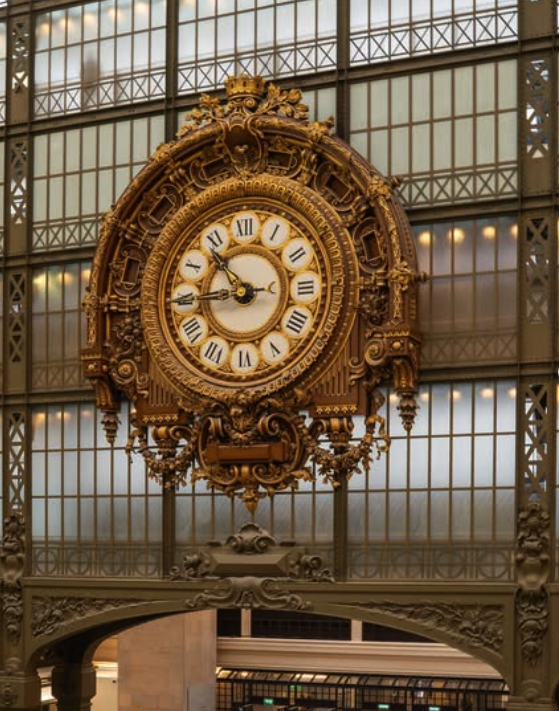
Most of these are visible on an ordinary visit if you know to look. Stand in the middle of the nave and read it as a platform hall: the glazed roof was there to light trains, not sculpture. Look up at the ironwork the stone façade was built to hide. Go to the upper level and look out through the clock face, which was installed so passengers could catch a train rather than photograph a view.
The paintings carry their own evidence too. Olympia still stops people at forty paces, which tells you the 1865 reaction was about more than prudishness.
The short version
- Opened 1900 as a railway station, for a World's Fair
- First electrified urban terminal anywhere
- Closed to mainline trains in 1939, platforms too short
- Nearly demolished in the 1970s
- Reopened as a museum in December 1986
- Collection: 1848 to 1914, and nothing outside it
If any of that makes you want the longer version on site, our travellers' reviews suggest the guides are where it comes from, and visiting the Musée d'Orsay covers the practicalities.
Hear the rest of it on site
Guides cover the building's story alongside the paintings it now holds.
Musée d'Orsay toursTours that tell the building's story
One bundles an audio guide on the museum's history; the other has a guide to ask.